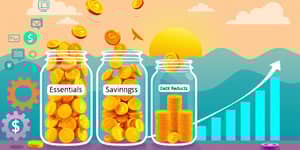
In today’s rapidly shifting economic landscape, taking charge of your finances is not merely a choice—it’s a necessity. By treating your finances as a self-managed economic system, you empower yourself to navigate uncertainty, seize opportunities, and pave the way for lasting stability.
Over the next sections, you’ll explore key pillars, actionable strategies, and insightful data to guide you toward achieve your financial goals with confidence and clarity.
Understanding Your Personal Economy
Your personal economy encompasses more than income and expenses. It integrates intangible assets like time, energy, attention, and social connections, aligning them with your values to foster sustainable growth and well-being.
At its core, this approach views your financial life as an ecosystem where budgeting, debt management, net worth tracking, and risk planning interact to prepare for unplanned events and drive progress.
The Four Pillars of Financial Health
Every robust personal economy rests on foundational pillars, each influencing your overall net worth and resilience.
- Assets and Liabilities: Calculate your net worth by subtracting debts from assets to understand your financial starting point.
- Income Streams: Evaluate wages, investments, rental returns, and side ventures to maximize inflows.
- Expenses and Controls: Track spending habits to identify leaks and optimize every dollar.
- Savings and Protection: Build buffers against emergencies and insure against unexpected risks.
Maintaining equilibrium among these pillars ensures that financial shocks become manageable challenges rather than crises, highlighting how balance determines net worth.
Diversifying Your Income Streams
Relying on a single income source can expose you to risk. Diversification strengthens your financial fortress by opening new avenues for value creation.
- Earned Income (wages and salaries): The backbone of most personal economies, representing approximately 60% of total income.
- Portfolio Income (dividends and asset sales): Leverages capital gains to boost purchasing power.
- Rental and Interest Income: Generates passive inflows through property and fixed-income instruments.
- Side Ventures and Passive Streams: From freelancing to digital products, these channels can accelerate growth.
By blending active and passive sources, you cultivate resilience and position yourself to align resources with personal values while pursuing growth.
Tracking and Analyzing Your Finances
Data-driven insights illuminate trends and reveal opportunities for optimization. Regularly reviewing your financial metrics prevents surprises and powers informed decisions.
Armed with these statistics, you can benchmark your performance, set realistic targets, and chart a course toward greater financial independence.
Strategies to Strengthen Your Financial Foundation
Implementing actionable tactics creates momentum and builds confidence over time.
- Develop a comprehensive budget that categorizes income and expenses, revealing potential surpluses for investment.
- Establish or replenish an emergency fund covering three to six months of essentials to prepare for unplanned events.
- Adopt a targeted debt repayment plan, prioritizing high-interest balances to accelerate wealth accumulation.
- Invest consistently through diversified portfolios, balancing growth objectives with risk tolerance.
- Protect yourself and loved ones with appropriate insurance, wills, and estate planning measures.
By methodically addressing each area, you transform abstract goals into concrete milestones and foster household efficiency and value creation.
Harnessing Efficiency and Value Creation
Maximizing nonfinancial resources is equally critical. Time, energy, and attention are finite assets demanding strategic allocation.
Streamline your daily routines with productivity frameworks, automate bill payments, and adopt tools that sync with your lifestyle. Cultivating strong social connections and networks can open doors to mentorship, job opportunities, and collaborative ventures.
When you prioritize tasks that deliver the highest returns on time and effort, every hour becomes an investment in your economic well-being.
Building Resilience in Uncertain Times
The economic outlook for 2026 reveals persistent inflation, rising costs, and widespread financial anxiety. Over 80% of individuals report regular stress about money, and a third anticipate worsened conditions.
To withstand volatility, remain adaptable. Revisit your budget monthly, explore new qualifications or side gigs to diversify income, and emphasize mental wellness through mindfulness or support groups. Cultivating a growth mindset shifts your perspective from scarcity to abundance.
Embracing Your Role as Financial CEO
You are the chief architect of your financial destiny. By adopting a holistic, ecosystem-based approach, you elevate daily transactions into strategic decisions that compound over time.
Start today: map your assets, liabilities, income streams, and expenses. Set clear, time-bound goals. Leverage the tools, frameworks, and insights shared here to make every move intentional. As you iterate, your confidence will grow, and your personal economy will thrive.
Remember, sustaining wealth is a marathon, not a sprint. Steady progress, informed choices, and a resilient mindset ensure that your financial journey leads to lasting prosperity.
References
- https://simplicable.com/economics/personal-economy
- https://fortunly.com/statistics/personal-finance-statistics/
- https://en.wikipedia.org/wiki/Personal_income
- https://investingintheweb.com/education/personal-finance-statistics/
- https://spero.financial/understanding-the-four-pillars-of-personal-finance/
- https://www.bankrate.com/banking/financial-outlook-survey/
- https://lifestyle.sustainability-directory.com/term/personal-economy/
- https://www.youtube.com/watch?v=_pBTzgF-0C0
- https://corporatefinanceinstitute.com/resources/wealth-management/personal-finance/
- https://www.intuit.com/blog/innovative-thinking/2026-financial-forecast-mindful-stress/
- https://sp.hsbc.com.my/liquid/5811.html
- https://www.pfcu.com/resources/education/moneyline-blog/january-2026/complete-guide-money-management-2026
- https://saylordotorg.github.io/text_macroeconomics-theory-through-applications/s10-01-the-single-person-economy.html
- https://www.statista.com/statistics/1173591/opinion-personal-financial-situation-past-year-age-us/
- https://www.newyorklife.com/articles/what-is-personal-finance