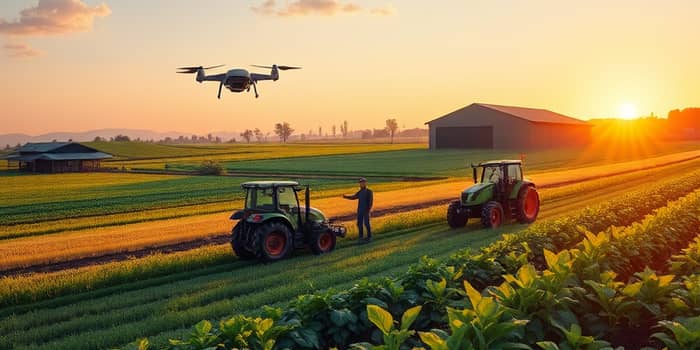
As global agriculture faces mounting pressures—from unpredictable weather patterns to volatile markets—the pathway to prosperity lies in embracing a new era of innovation. AgTech stands at the forefront, offering farmers the tools to boost productivity and build resilience. By weaving cutting-edge technologies with time-honored practices, growers can unlock greater yields while safeguarding their operations against threats. This article delves into the key trends driving productivity and the strategies that help mitigate risk, illuminating a route toward a secure, bountiful future.
Unlocking the Rewards of AgTech
In 2026, agricultural innovators have validated a suite of technologies in the field, transforming speculative concepts into practical solutions. Among the most impactful are biological inputs, advanced robotics, AI-driven platforms, and water resilience tools. Each breakthrough contributes to a tapestry of empowerment for farmers worldwide.
- Biological fertilizers, biostimulants, and biocontrols offer sustainable yield stability with minimal residue.
- Field robotics and autonomous machinery tackle labor shortages and enhance precision in orchards, vineyards, and broadacre operations.
- AI-driven advisory and optimization integrates GPS, forecasting, and nutrient modeling for timely, data-driven decisions.
- Water and climate resilience technologies employ real-time sensors and drought-tolerant genetics to protect crops under extreme conditions.
These innovations not only improve efficiency but also foster environmental stewardship, creating systems that can adapt and thrive amid shifting conditions.
To contextualize the potential impact, consider this summary of high-impact trends:
Mapping the Risks of Modern Agriculture
While AgTech paves the way for higher yields, farmers still contend with a spectrum of risks. Understanding these threats is the first step toward building resilient operations.
Production risks include droughts, floods, extreme temperatures, pest outbreaks, and soil degradation from overuse of chemicals. Such events can devastate yields and livelihoods in a single season.
Market and economic risks stem from input cost fluctuations, commodity price volatility, trade policy changes, and supply chain disruptions. Farmers often find themselves exposed to global forces beyond their control.
Labor and operational risks arise from seasonal worker shortages and rising wage demands, which complicate planting and harvesting schedules, driving up costs.
Environmental pressures also intensify these challenges. Smallholders without access to technology are especially vulnerable when climate extremes disrupt traditional cropping cycles.
A Holistic Framework for Risk Mitigation
To address these threats, the PARM initiative has developed a comprehensive approach built on five key pillars for resilience. This framework guides farmers and policymakers through a continuous cycle of assessment and improvement.
The five pillars are:
- Risk assessment and prioritization at both farm and national levels
- Identification and deployment of tailored mitigation tools
- Access to timely information and capacity-building programs
- Partnerships among stakeholders and policy integration
- Ongoing monitoring, evaluation, and adaptation
By systematically applying these pillars, stakeholders can layer defenses against threats before they materialize, share risk burdens, and react effectively when events occur.
Layering Strategies for Resilience and Growth
Within this holistic framework, farmers employ three main categories of strategies: ex-ante risk mitigation, risk transfer, and ex-post coping measures. Each category offers distinct advantages and, when combined, creates a robust safety net.
Ex-ante mitigation strategies focus on reducing potential losses through proactive measures. These include crop rotation, drought-tolerant seed varieties, integrated pest management, efficient irrigation systems, and diversified income streams such as agroforestry or value-added processing.
Risk transfer mechanisms shift financial exposure away from the farm. Options range from crop and livestock insurance to futures contracts and forward pricing agreements. In 2026, enhanced subsidy programs provide 3–5% premium support, making insurance more accessible.
Coping strategies implemented after adverse events seek to minimize damage and accelerate recovery. Preplanned contingency measures—such as emergency feed reserves, community-based mutual aid, and rapid deployment of mobile repair units—ensure that shocks do not cascade into crises.
Additionally, enterprise diversification and adaptive management play a critical role. By cultivating a variety of crops or livestock, farmers hedge against market downturns and disease outbreaks. Regularly monitoring industry trends and adjusting practices helps build agile operations that pivot with changing conditions.
Financial Enablers and Partnerships
Investment remains pivotal for scaling resilient farming practices. Flexible financing models, including equipment leasing, low-interest credit lines for irrigation upgrades, and blended public-private funds, enable adoption without prohibitive upfront costs. Collaborations between agribusinesses, research institutions, and development agencies further drive down barriers to entry.
Extension services and two-day ARM seminars equip farmers with the skills to leverage tools effectively, fostering endogenous capacity. When farmers understand the technologies they deploy, they optimize usage and achieve consistent returns on investment.
Looking Ahead: A Vision for 2026 and Beyond
The coming years will define global food security and sustainability trajectories. As AgTech innovations continue to mature, they offer unprecedented opportunities to feed a growing population while conserving vital ecosystems.
Despite well-supplied commodity markets in 2026, acute hunger persists for nearly 300 million people. By embedding data-driven decision-making and resilience-building into farming systems, stakeholders can narrow this gap and ensure equitable access to nutritious food.
Scaling solutions remains a challenge. Contextual adaptability, cost-effectiveness, and external validity demand rigorous testing across diverse geographies and farm sizes. While policy advances such as the USDA National Farm Security Action Plan lay the groundwork for supportive frameworks, meaningful progress hinges on inclusive partnerships that bridge public, private, and community interests.
Ultimately, the journey toward a secure harvest depends on the collective will to innovate responsibly, manage risk holistically, and invest in the future of agriculture. By combining the power of technology with time-tested practices, farmers can cultivate both abundance and assurance—harvesting rewards that endure for generations to come.
The secure harvest is within reach when we adopt resilient practices, harness cutting-edge tools, and collaborate across borders and disciplines. The rewards are not only higher yields and increased profits but also the peace of mind that comes from knowing our farms can withstand the challenges ahead.
References
- https://www.icl-group.com/blog/future-of-agtech-2026/
- https://www.farmcreditofvirginias.com/blog/building-resilience-guide-risk-management-agriculture
- https://www.visionaryvogues.com/agri-tech-revolution-2026-smart-farming-food-security
- https://www.fbfs.com/learning-center/farmers-manage-risk-in-uncertain-environments
- https://www.dllgroup.com/en/blogs/blogsoverview/innovative-agriculture-key-trends-for-2026
- https://www.startus-insights.com/innovators-guide/agriculture-trends/
- https://dab.hawaii.gov/add/md/risk-management/
- https://www.terrainag.com/insights/trends-to-watch-in-2026-from-the-economists-view/
- http://www.ers.usda.gov/topics/farm-practices-management/risk-management/risk-management-strategies
- https://www.usda.gov/about-usda/news/radio/daily-newsline/2026-02-12/trends-americas-farms-and-ranches
- https://extension.psu.edu/building-a-risk-management-toolkit-for-new-and-beginning-farmers/
- https://agrithority.com/the-state-of-ag-2026-outlook-and-trends/
- https://www.worldbank.org/en/topic/agriculture/brief/food-security-update