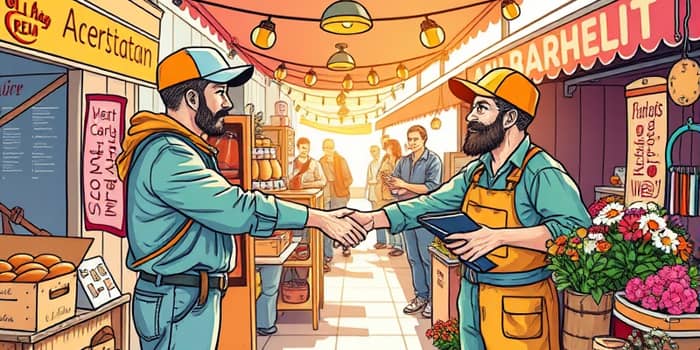
In an era of economic unpredictability, bartering has reemerged as a powerful tool for businesses and individuals alike. By bypassing traditional currency, parties exchange goods or services directly, unlocking value without relying on cash.
From ancient marketplaces to modern barter exchanges, this age-old practice now offers fresh opportunities for growth, resilience, and community building.
Why Bartering Matters in 2026
Global events and fluctuating markets have reignited interest in barter systems. Studies show that up to 30% of world trade involved direct exchanges as recently as 2004, and participation among Fortune 500 firms reached 65%. In times of cash shortages or hyperinflation, bartering preserves cash reserves and liquidity, ensuring operations continue without interruption.
Historical Roots of Direct Exchange
Bartering predates coined money by millennia. Early communities traded livestock, grains, textiles, and tools based on mutually agreed value. As societies complexity grew, specialized roles emerged, yet barter remained vital wherever currency was scarce or distrusted.
With the dawn of banking and digital payments, barter retreated—only to resurface in the 1990s when businesses sought innovative ways to optimize resources and navigate financial crises.
Types of Bartering Networks
- 1-to-1 (Direct) Bartering: Two parties exchange items or services directly—no intermediaries, no fees. Ideal when needs align perfectly and trust is high.
- Multilateral Barter Exchanges: Members trade through an internal credit system. A gift basket maker may earn credits by selling baskets and spend them on roofing services—scalable, but membership fees apply.
- Crisis or Informal Bartering: Spontaneous exchanges during disasters or monetary collapse. Flexible and fast, relying on negotiation rather than formal agreements.
Financial Benefits of Bartering
By engaging in barter, businesses reap numerous advantages. Without spending cash, they can:
- preserves cash reserves and liquidity to invest in critical growth initiatives.
- inventory optimization for surplus goods, turning dormant stock into valuable assets.
- Boost sales and production capacity with no cash outflow required, leveraging economies of scale.
- Forge builds long-term trust-based partnerships that fuel repeat collaboration.
- access new markets without budgets, expanding customer bases with minimal marketing spend.
- Unlock significant circular economy benefits, reducing waste and fostering sustainability.
How to Get Started with Bartering
Initiating a successful barter relationship requires planning and clear communication. Follow these steps to begin:
- Define your assets and needs. List goods, services, or excess inventory you can offer and what you seek in return.
- Determine fair market values. Research industry rates or use barter exchange credit guidelines to ensure equitable deals.
- Identify partners. Network through local business associations, online barter platforms, or industry events.
- Draft simple agreements. Outline deliverables, timelines, and any quality standards to avoid misunderstandings.
- Track transactions. Maintain records of exchanged values for performance analysis and tax compliance.
Managing Risks and Challenges
Despite its benefits, bartering comes with pitfalls. Valuation disputes can arise when parties disagree on fairness. To mitigate this, agree on pricing benchmarks or use third-party appraisals.
Tax authorities treat barter income like cash income. Each party must report fair market value, often documented via Form 1099-B. Proper bookkeeping and timely filings help avoid penalties.
Scalability may be limited by the “coincidence of wants”—the need for direct matches. Joining multilateral exchanges can overcome this by broadening your network.
Comparing Barter and Cash Systems in Crisis
Modern Trends and Future Outlook
Digital platforms are revolutionizing barter, matching offers with demand across continents. Blockchain and smart contracts promise trust automation, reducing disputes and administrative costs.
Amid environmental concerns, bartering’s circular economy benefits gain traction—reuse and exchange minimize resource extraction. Businesses that innovate in this space will thrive in economic uncertainty and position themselves as sustainability leaders.
Conclusion
The art of bartering transcends mere survival in tight financial times. It’s a strategic approach that fosters creativity, builds resilient networks, and amplifies value without draining cash.
By understanding its history, mastering valuation, and adopting modern tools, you can harness barter’s full potential. Embrace this timeless practice and watch your business flourish—no money required.
References
- https://fynk.com/en/blog/bartering-guide-successful-trade-exchange/
- https://primetradenw.com/what-is-the-difference-between-trade-and-barter/
- https://corporatefinanceinstitute.com/resources/economics/bartering/
- https://www.tradebank.com/barter-university
- https://efpradvisory.com/news/article-publication/business-services/does-your-business-barter-here-are-some-facts-you-should-know/
- https://tbtbarter.com/blog/barter-system-vs-money-which-system-would-work-in-a-crisis/
- https://www.oreateai.com/blog/trade-vs-barter-understanding-the-nuances-of-exchange/b60a87bf692518e75c8756cb596bea4b
- https://barternetwork.ca/why-the-bartering-craze-has-made-a-comeback/
- https://blog.fracturedatlas.org/true-false-bartering
- https://in.indeed.com/career-advice/career-development/what-is-barter
- https://www.brookings.edu/articles/the-partial-data-barter-trades-of-the-digital-economy/