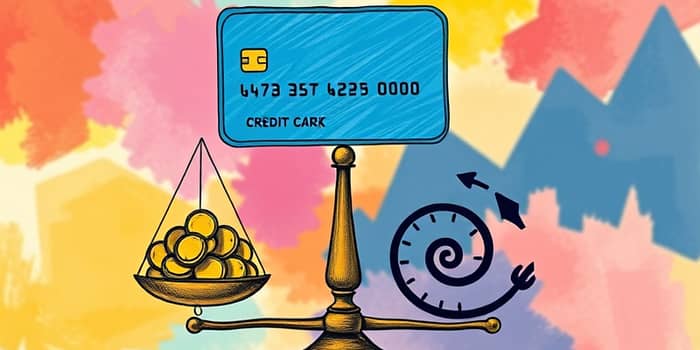
Credit cards have become an indispensable part of modern financial life, powering over one-quarter of global retail spending and accounting for more than 21% of US GDP contribution. In 2025 alone, Americans carried over 800 million cards in circulation, averaging nearly 3.9 cards per person and driving a staggering $1.28 trillion in purchase volume. Yet, this convenience carries both promise and peril.
Understanding the Evolution of Credit Cards
The journey from the first charge card in the 1950s to today’s digital tap-to-pay revolution highlights remarkable growth. Year-over-year volume expanded by 8.2% in 2025, outpacing GDP growth and underscoring consumers’ embrace of plastic money. Network dominance remains clear: Visa commands 53% market share, Mastercard 26%, American Express 19%, and Discover 3%.
This shift reflects not only broader acceptance but also evolving consumer expectations. Today’s cardholders demand speed, safety, and rewards, reshaping how issuers design products and services.
Key Benefits of Credit Card Use
When managed responsibly, credit cards unlock an array of advantages. From cash back to global security measures, these tools can bolster your financial wellbeing.
- rewards serve as a financial lifeline: General cards delivered an average return of 1.6 cents per dollar in 2022, generating $41.1 billion in rewards. Low-to-moderate income earners now represent 69% of rewards cardholders, using redemptions to offset everyday costs.
- 77% prefer credit cards for protection: Robust fraud safeguards mean victims often pay nothing on unauthorized charges, compared to limited debit alternatives.
- Unmatched convenience: Tap-to-pay transactions are 63% faster than cash, while 69% of online shoppers opt for credit cards, driving digital and mobile commerce.
- building a healthy credit history: 41% of Gen Z and 70% of young Americans leverage cards to establish credit, with average limits rising 6.8% year-over-year to nearly $29,855.
These benefits translate into real-world perks: airport lounge access, travel insurance, purchase protections, and issuer portals offering targeted boosts and limited-time promotions.
Common Pitfalls and How to Avoid Them
While the upside is compelling, mismanagement can lead to long-term financial strain. Average interest rates climbed to 22.8% in 2025, fueling $1.2 trillion in revolving balances—record highs partly driven by inflation and emergencies.
Delinquencies have held steady under tighter lending standards, yet unexpected medical or emergency charges account for 25% of new debt. Annual fees and high rates can quickly outweigh rewards if balances carry month to month.
Demographics and Consumer Behavior
Card ownership shows clear age and income patterns. Gen Z and Millennials lead in leveraging cards for credit building, with 60% of younger adults holding accounts by their early 20s. Low-to-moderate income households now mirror higher earners in rewards participation, signaling broad access and similar redemption behaviors across socioeconomic groups.
Despite stereotypes, data confirms that all income levels earn and redeem rewards at comparable rates, debunking the myth that only affluent consumers benefit. This democratization of perks has made credit cards a vital tool for managing budgets amid rising living costs.
2026 Trends and Emerging Forecasts
As we advance through 2026, the landscape promises stability with nuanced shifts. Balances are projected to grow a modest 2.3% by year-end, while delinquency rates remain controlled. Rewards devaluations are unlikely, with major issuers sustaining transfer ratios and enhancing issuer portals to deepen engagement.
Product innovation continues with dynamic pricing on long-haul awards—some requiring up to 400,000 points—and refreshed annual fee structures offering greater statement credits. Capital One’s primary lounge access now comes without additional fees, appealing to premium travelers.
Online and mobile transactions will further dominate, pushing issuers to refine digital wallets, tokenization, and real-time fraud monitoring. The ongoing value of rewards as an inflation hedge ensures that cards remain central to consumer spending strategies.
Practical Tips for Mastering Your Credit Card
Achieving mastery requires intentional practices. Adopt these strategies to maximize benefits and sidestep common traps:
- Pay your balance in full each month to avoid interest charges.
- Redeem rewards promptly to prevent devaluations or expirations.
- Monitor statements and set up real-time alerts for suspicious activity.
- Leverage free tools like issuer portals for bonus point opportunities.
- Review annual fees against earned perks to ensure net positive value.
By combining disciplined payment habits with strategic redemption, you can transform credit cards into powerful financial partners rather than pitfalls.
Conclusion
Credit cards in 2026 stand at the intersection of empowerment and risk. With net purchase volume reached $1.28 trillion in 2025 and 94% cardholder satisfaction, the case for responsible use is stronger than ever. Yet, balances remain above pre-pandemic levels and global fraud losses threaten progress.
Ultimately, avoiding revolving debt and maximizing rewards allows you to harness the full potential of your cards. Equip yourself with knowledge, embrace evolving technologies, and maintain disciplined financial habits to ensure your credit cards serve as tools for growth — not setbacks.
References
- https://use.expensify.com/blog/credit-card-statistics
- https://electronicpaymentscoalition.org/2024/04/30/new-study-data-shows-credit-card-rewards-are-a-lifeline-for-working-class-americans/
- https://thepointsguy.com/credit-cards/tpg-predicts-2026-trends/
- https://consumerbankers.com/blog/point-of-impact-the-power-of-credit-cards/
- https://www.corservsolutions.com/yahoo-finance-what-cardholders-should-know-in-2026/
- https://www.ipsos.com/en-us/majority-americans-value-their-credit-card-rewards
- https://javelinstrategy.com/research/credit-card-databook-2026
- https://www.aba.com/about-us/press-room/press-releases/fall-2025-morning-consult-survey-results-payments
- https://www.thisweekinfintech.com/consumer-credit-cards-in-2026/
- https://www.nerdwallet.com/credit-cards/learn/credit-card-data
- https://creditunions.com/features/perspectives/the-influence-of-credit-card-rewards-on-consumers/