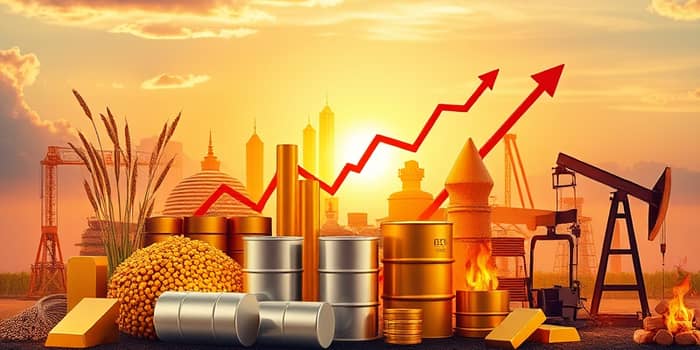
Commodities have long been the backbone of global trade, encompassing raw materials from precious metals to agricultural staples. As an alternative asset class, they offer unique advantages that extend beyond traditional stocks and bonds.
By understanding the fundamentals, benefits, risks, and strategic implementation of commodity investments, investors can harness their power to enhance portfolio performance and resilience.
The Fundamentals of Commodity Investing
At its core, a commodity is a basic good used in commerce, from crude oil and natural gas to copper, wheat, and gold. Prices are determined by supply and demand dynamics rather than corporate earnings, making them less correlated to equity markets.
Global factors such as geopolitics, weather events, and trade policies heavily influence commodity prices. For example, a drought in major grain-producing regions can drive up agricultural futures, while geopolitical tensions might spur spikes in oil benchmarks.
Unlike conventional securities, commodities are traded in various forms, including physical holdings, futures contracts, and exchange-traded products. Each vehicle offers distinct advantages and complexities, which investors must evaluate carefully.
Key Benefits of Commodity Investing
Incorporating commodities into a diversified portfolio can unlock several strategic benefits:
- Portfolio diversification: Commodities often move inversely to stocks and bonds, reducing overall volatility.
- Inflation hedge: Prices tend to rise during periods of inflation, preserving purchasing power.
- Return potential: Futures markets offer positive risk premia over time, boosting long-term gains.
- Resilience to market cycles: Driven by supply and demand, commodity returns can persist even when equity markets stumble.
Research indicates that commodities have delivered average gains of 7–9% for each 1% unexpected rise in global inflation over the past decade. This characteristic makes them particularly appealing to investors concerned about eroding purchasing power.
Understanding the Risks of Commodities
Despite their appeal, commodities carry inherent risks. High price volatility can produce significant gains but also steep losses during adverse market moves.
Trading futures involves margin requirements and potential for quick margin calls when prices swing. Novices often underestimate the leverage embedded in these contracts.
Speculative forces can exacerbate price swings. Even managed funds linked to commodity indexes remain exposed to unpredictable events, from extreme weather to sudden policy changes.
Leverage, while amplifying returns, can equally magnify losses. Investors should approach commodity derivatives with caution and solid risk management practices.
Ways to Invest in Commodities
Major Commodity Categories and Their Drivers
- Energy: Oil, natural gas, LNG. Demand shaped by global GDP growth and the energy transition.
- Metals: Precious (gold, silver), base (copper, aluminum), rare earths. Driven by industrial activity and technology adoption.
- Agriculture: Grains (wheat, corn), softs (cotton, coffee). Sensitive to weather and population dynamics.
- Emerging sectors: Livestock, biofuels, plant-based proteins. Reflect shifting consumer preferences and sustainability trends.
2026 Market Outlook: Navigating Conflicting Forecasts
Analyst projections for 2026 vary widely. Optimistic forecasts by leading banks anticipate supportive returns amid central bank cuts, robust GDP growth, and rising clean energy investment. Metals essential to the energy transition could face supply shortages, while gold demand may strengthen with geopolitical tensions.
Conversely, some institutions predict modest price declines, citing ample supply, slower demand growth—particularly in China—and tariff impacts. They foresee natural gas and precious metals performing relatively better, while oil, agricultural, and soft commodities may retreat.
Mixed scenarios emphasize diversification and innovation. Geopolitical shifts in rare earth production, expansion of LNG infrastructure, and digital transformation in trading platforms could reshape risk-reward dynamics.
Strategies for Building a Balanced Commodity Allocation
When incorporating commodities, a strategic allocation of 5–10% of portfolio value is common. This range balances potential benefits with acceptable risk levels.
Begin with broad-based ETFs or mutual funds to gain diversified exposure. As expertise grows, investors may consider targeted positions in specific sectors, such as energy transition metals or agricultural futures.
Risk management tools—stop-loss orders, position sizing, and stress tests—are essential to mitigate downside. Regular rebalancing ensures that gains or losses do not distort the intended allocation.
Consulting with a financial advisor skilled in alternative investments can provide tailored insights, helping to align commodity strategies with individual goals and risk tolerance.
The Role of Commodities in a Forward-Thinking Portfolio
Historically, commodities have demonstrated a reliable track record as a hedge against inflation and portfolio volatility. Over decades, balanced portfolios including a modest commodity allocation have delivered stronger risk-adjusted returns than all-equity or all-bond portfolios.
Looking ahead, technological advances in trading, corporate hedging partnerships, and evolving global demand patterns position commodities as a vital element of modern asset allocation.
By embracing both the opportunities and challenges, investors can unlock long-term growth potential and resilience, ensuring their portfolios remain robust in an ever-changing economic landscape.
References
- https://www.northwesternmutual.com/life-and-money/what-are-commodities/
- https://www.parametricportfolio.com/blog/commodity-market-outlook-2026
- https://www.sofi.com/learn/content/commodity-investing-risks/
- https://www.morganstanley.com/im/en-be/intermediary-investor/insights/articles/trends-driving-optimism-in-2026.html
- https://groww.in/blog/pros-and-cons-of-commodity-trading
- https://www.oxfordeconomics.com/resource/commodities-outlook-2026-another-challenging-year-ahead/
- https://www.pimco.com/us/en/resources/education/understanding-commodities
- https://www.baringa.com/en/insights/trading-business-of-tomorrow/commodity-market-trends-2026/
- https://www.cftc.gov/LearnAndProtect/AdvisoriesAndArticles/CustomerAdvisory_CommodityETPs.htm
- https://www.ubs.com/us/en/wealth-management/insights/market-news/article.3002623.html
- https://realinvestmentadvice.com/resources/blog/the-different-types-of-commodity-investments-and-their-characteristics/
- https://www.worldbank.org/en/research/commodity-markets
- https://www.cfainstitute.org/insights/professional-learning/refresher-readings/2026/introduction-commodities-commodity-derivatives