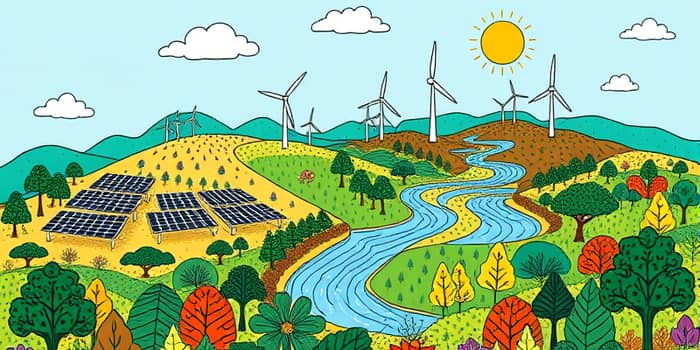
As we step into 2026, the landscape of sustainable finance is marked by a decisive shift from lofty ideals to grounded resilience. Investors face a complex mix of political shifts, maturing clean technologies, and evolving regulations. This article explores key pillars—climate transition, adaptation to physical risks, natural capital, AI’s role in ESG, and innovative financing—designed to guide asset owners toward measurable impact and durable returns.
By combining data-driven insights with strategic allocations, you can align your portfolio with emerging opportunities across water management, energy integration, biodiversity, and blended finance structures. Let’s dive into practical strategies for building a truly resilient and sustainable portfolio.
From Idealism to Actionable Resilience
In recent years, sustainable investing was often framed as a moral imperative. Today, it is recognized as a domain of robust economic potential and risk mitigation. Stakeholders no longer debate whether they should act; they focus on how to integrate measurable resilience into core portfolios. This shift underscores that climate adaptation and mitigation are not fringe considerations but central drivers of asset performance. By aligning strategies with empirical data and stress testing under multiple scenarios, investors can build portfolios capable of thriving in uncertain political and environmental climates.
Climate Adaptation and Resilience as Growth
With physical risks intensify globally, companies and governments are pivoting from passive hedges to active growth markets. COP30 commitments to tripling adaptation finance by 2035 signal a major tide change: adaptation is no longer a cost center but a value creator. In 2025, 57% of large corporations reported material climate impacts. By financing water management, grid upgrades, and disaster response, investors can capture returns in sectors that will see sustained demand under more extreme weather patterns.
- Advanced water scarcity and management systems
- Grid hardening and energy storage solutions
- Rapid-deployment disaster response technologies
- Climate-resilient building and infrastructure materials
Allocating capital to these areas supports both community resilience and long-term investment performance. As adaptation indicators become standardized, data-driven asset selection will reward early movers.
Energy Transition and System Integration
Global energy-related greenhouse gas emissions are projected to peak in 2026, driven by efficiency gains, retiring fossil assets, and renewables meeting new energy demand. Yet, integration challenges remain. Bottlenecks in grid capacity, storage, permitting, and cross-border transmission can stall project economics. Investors must evaluate portfolios through the lens of system flexibility and policy trajectories, particularly as geopolitical reshoring of supply chains reshapes the electrostate versus petrostate dynamic.
- Modernization of transmission and distribution networks
- Large-scale battery and hydrogen storage deployment
- Streamlined permitting and regulatory harmonization
- Reshoring and localization of critical minerals
Financing solutions that address these pinch points can unlock outsized returns while accelerating decarbonization. Transition finance is maturing into its own asset class, expanding beyond traditional renewable energy into integrated system solutions.
Key 2025-26 Market Indicators
Natural Capital and Biodiversity Investments
Protecting and restoring natural ecosystems is central to long-term value creation. Investors must bridge the $4.9 trillion gap between nature-negative and the current $23 billion in private nature-positive financing. Mechanisms like debt-for-nature swaps and green bonds are scaling. Portfolio approaches range from solution providers—companies offering restoration services—to integrative strategies that tilt allocations toward nature-positive activities within broader equity and fixed-income holdings.
As regulatory focus sharpens on deforestation, water stress, and biodiversity loss, early alignment with emerging standards will confer a competitive advantage. Nature-related risks are deeply intertwined with transition pathways, making this a strategic imperative rather than a siloed consideration.
Harnessing AI and Technology for ESG Advantage
Artificial intelligence is a double-edged sword for environmental, social, and governance efforts. On one hand, AI enables advanced risk pricing, granular emissions tracking, and dynamic scenario modeling. On the other, it drives increased energy demand from data centers and raises ethical and labor concerns. Investors must differentiate technology leaders by evaluating energy-efficient data infrastructure and governance frameworks that mitigate unintended social impacts.
Integrating integration of climate and nature data through AI platforms allows for holistic portfolio risk assessments. This greater visibility into interconnected risks enhances strategic decision-making, from asset selection to shareholder engagement.
Innovative Financing and Private Market Scaling
Private capital continues to dominate sustainability and impact themes. Structured products such as blended finance, concessional capital, and targeted bonds are unlocking new pools of funding. Noteworthy is the Structured Climate Accelerator (SCALED) initiative that channels blended capital into frontier markets, de-risking investments in emerging regions. Structured green and sustainability-linked bonds have seen record issuances, offering compelling risk-adjusted returns and material impact outcomes.
Key instruments include green and social bonds, debt-for-nature swaps, structured retrofit financing, and private climate infrastructure partnerships. With 86% of asset owners planning to boost sustainable allocations over the next two years, innovative capital structures will be at the core of growth strategies.
Building a Resilient Sustainable Portfolio
Constructing a portfolio for 2026 and beyond requires a balanced blend of transition, adaptation, and natural capital exposures. Key tactics include setting interim decarbonization and adaptation targets, employing scenario analysis for climate and biodiversity risks, engaging in active stewardship on governance and human rights, and allocating to private markets for enhanced impact.
- Setting interim decarbonization and adaptation targets
- Employing scenario analysis for climate and biodiversity risks
- Engaging in active stewardship on governance and human rights
- Allocating to private markets for enhanced impact
Adopting private capital scaling climate solutions through collaborative funds and public-private partnerships amplifies reach and resilience. As policy frameworks evolve, nimble allocation shifts will capture emerging opportunities and mitigate downside risks. Ultimately, the most successful portfolios will integrate environmental and social factors not as add-ons but as core drivers of value. By anchoring decisions in data, leveraging technology, and embracing innovative financing, investors can foster both financial returns and meaningful contributions to a sustainable future.
References
- https://www.diyinvestor.net/five-themes-that-will-shape-sustainable-investing-in-2026/
- https://foresight.group/news-insights/insights/2026/sustainable-investment-trends-for-2026/
- https://www.franklintempleton.com/articles/2026/clearbridge-investments/esg-2026-outlook-resilience-and-evolution
- https://connect.sustainalytics.com/sustainable-investing-trends-to-watch-in-2026
- https://www.americancentury.com/institutional-investors/investment-outlook/sustainable-investing-trends/
- https://about.amundi.com/article/our-responsible-investment-views-2026-out
- https://www.schroders.com/en-us/us/institutional/insights/2026-sustainable-investment-outlook-7-key-trends-for-north-america-in-the-year-ahead/
- https://ntam.northerntrust.com/united-states/all-investor/about-us/investment-stewardship/sustainable-investment-trends
- https://www.wri.org/technical-perspectives/6-opportunities-sustainable-finance-2026
- https://www.morganstanley.com/insights/articles/investment-outlook-shaping-markets-2026
- https://www.spglobal.com/sustainable1/en/insights/2026-sustainability-trends
- https://www.issgovernance.com/sustainability/actionable-insights-top-sustainability-themes-in-2026/
- https://www.lseg.com/en/insights/sustainable-investment-an-improving-context-for-2026
- https://sustainability.freshfields.com/post/102mfa5/7-esg-trends-to-watch-in-2026
- https://greenmoney.com/five-sustainable-finance-predictions-for-2026/