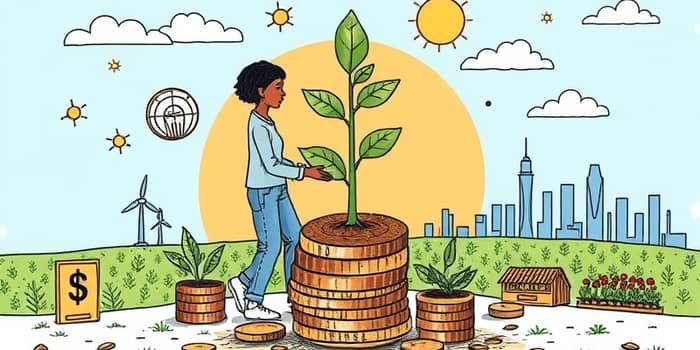
In an increasingly uncertain world, traditional financial planning often falls short of addressing ecological risks and long-term societal impacts. Financial foresight offers a holistic framework that weaves together fiscal responsibility, environmental stewardship, and a deep commitment to future generations. Rather than viewing savings as mere buffers against adversity, this approach empowers individuals to shape resilient, value-driven financial pathways that stand the test of time.
At its heart, financial foresight transforms budgets into vehicles for empowerment. By aligning day-to-day decisions with broader sustainability goals, you embark on a journey that not only secures personal well-being but also enriches communal and planetary health. Embracing this philosophy requires a shift from reactive crisis management to proactive, strategic planning.
The Philosophy Behind Financial Foresight
At its core, financial foresight is a long-term strategy that aligns personal financial decisions with ecological sustainability and intergenerational well-being. This concept extends beyond simple saving to a philosophical connection between present actions and future impacts. By viewing budgets as tools for self-determination rather than restrictions, individuals and communities can cultivate a mindset of proactive stewardship.
Embracing this approach requires reframing traditional notions of growth and wealth accumulation to prioritize intergenerational responsibility and environmental integrity. Such a paradigm shift fosters a deeper sense of purpose and aligns personal ambition with collective resilience.
Resilience and Financial Autonomy
True resilience emerges from decentralizing risk across multiple domains. Rather than relying on a single income stream or energy source, individuals build multiple decentralized layers of security by diversifying revenue sources, strengthening local supply chains, and investing in climate-resistant assets. This approach values anti-fragility—systems that grow stronger under stress—over short-term gains susceptible to external shocks.
By accepting moderately lower yields on sustainable investments, you safeguard your future against resource scarcity and market volatility. This mindset cultivates independence and equips you to weather unforeseen economic or environmental disruptions with confidence and agility.
- Reduce dependence on global supply chains and centralized systems
- Expand networks of community support and cooperative finance
- Select investments with stable climate resilience profiles
Practical Strategies for Individuals
Applying financial foresight begins with everyday spending decisions. Recognize that small purchases diminish your capacity for high-impact investments. Adopting a long-term time dividend approach means reducing debt and consumption to reclaim personal time, allowing you to dedicate effort to meaningful pursuits like education or creative projects.
By directing funds toward durable goods, enriching experiences, and companies with ethical practices, you enhance life satisfaction and long-term wealth. Incorporating impact investing into your portfolio channels capital into renewable energy, sustainable agriculture, and social enterprises that address ecological challenges at their core.
- Create a budget aligned with sustainability and personal values
- Establish an emergency fund covering at least six months of expenses
- Diversify your portfolio to include ethical and impact-driven assets
Traditional vs. Foresight-Driven Approaches
Understanding the contrast between fragile and anti-fragile financial models clarifies your path forward. In traditional frameworks, maximizing quarterly profits often takes precedence, leaving portfolios exposed to market volatility and resource constraints. Conversely, foresight-driven strategies focus on stability and system health, prioritizing local food systems, renewable infrastructure, and minimal debt.
Integrating Academic and Technical Foundations
Financial foresight also demands rigorous analysis. Recalibrating social discount rates—potentially to near-zero or negative levels—ensures that ecological assets receive proper valuation. Viewing the economy as a subsystem of Earth’s finite ecosphere, strong sustainability dictates that natural capital isn’t interchangeable with manufactured goods.
Academic frameworks like behavioral economics and systems thinking help translate abstract risks into tangible financial liabilities. By calculating personal time-horizon alignment, you bring future generations into present-day decision-making, reinforcing accountability and long-term vision.
Implementing the Foresight Process
Transform intention into action through structured scenario planning. Begin by identifying probable futures that consider environmental, economic, and social variables. Use visibility tools to convert raw data into actionable insights, and apply forecasting models that project outcomes under varied conditions.
Regular scenario workshops and key performance indicators aligned to sustainability benchmarks empower you to prepare contingency strategies. By reviewing and adjusting plans annually, you position your finances for resilience regardless of unforeseen events.
- Conduct scenario workshops with community or advisors
- Monitor sustainability-aligned financial indicators
- Adjust plans in response to global and personal changes
Building a Lasting Legacy
Beyond personal well-being, financial foresight fosters intergenerational equity and sustainable legacies. Estate and legacy planning ensure that assets transfer according to your values, with wills, trusts, and tax-efficient structures safeguarding your intentions for future generations.
Cultivating financial literacy in your family and community bridges the intention-action gap, empowering future stewards to continue prudent, impactful management of shared resources. Educational initiatives and regular dialogue deepen understanding and commitment to ongoing sustainability efforts.
Conclusion
Financial foresight offers a roadmap to navigate uncertain futures with confidence and purpose. By embracing resilience, sustainability, and intergenerational responsibility, you transform your relationship with money into a force for positive change. The journey requires continual learning, disciplined planning, and ethical alignment, but the rewards—financial security, ecological harmony, and peace of mind—are profound.
Begin today by reevaluating your goals, diversifying strategies, and committing to a vision that transcends the present moment for the benefit of generations to come. Your actions now will echo across time, shaping a world where prosperity and sustainability coexist harmoniously.
References
- https://lifestyle.sustainability-directory.com/term/financial-foresight/
- https://foresight-ifp.co.uk/effective-financial-planning-techniques-foresight-wealth-strategists-uk/
- https://kanmon.com/blog/financial-foresight-and-strategic-planning
- https://epodcastnetwork.com/financial-foresight-preparing-for-a-prosperous-tomorrow/
- https://online.edhec.edu/en/blog/what-is-strategic-foresight-and-how-does-it-work/
- https://www.mjcpa.com/turning-financial-insight-into-business-foresight-empowering-your-company-for-strategic-growth/
- https://fhtrust.com/financial-foresight-crafting-a-long-term-plan-for-monetary-wellness
- https://www.marinerwealthadvisors.com/insights/financial-foresight-why-learning-before-you-decide-matters/