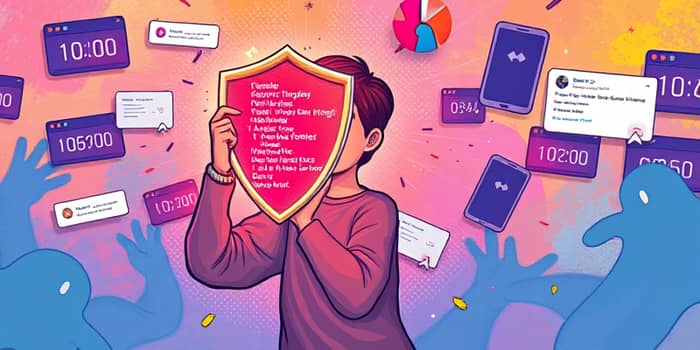
Digital platforms are rife with traps designed to mislead and manipulate. By understanding these tactics, you can safeguard your finances and personal data.
What Are Dark Patterns?
Dark patterns refer to deceptive user interface designs that covertly steer users toward decisions they might not make otherwise. Coined by UX designer Harry Brignull in 2010, these manipulative tactics exploit cognitive biases to benefit businesses at your expense.
From hidden fees that appear at checkout to disguised ads presented as editorial content, dark patterns are engineered to take advantage of cognitive biases like greed and urgency. Recognizing their hallmarks is the first step in dismantling their power.
How Dark Patterns Affect You
Recent studies reveal how widespread these tricks have become:
- A survey of over 11,000 shopping sites found over 1 in 10 sites employing at least one dark pattern, with some engaging in outright deception.
- The FTC’s 2024 review noted that 76% used at least one manipulative tactic and 67% used multiple in a single experience.
- From forced subscriptions to hidden data-sharing opt-ins, the sophistication of these traps continues to grow each year.
These practices can lead to unintended purchases, unwanted recurring charges, and serious privacy violations. Consider "Kumar," who believed he was making a one-time mutual fund purchase, only to find a locked investment for years, threatening his emergency fund.
Common Tricks to Watch For
Dark patterns manifest in many forms. The most prevalent include:
- Urgency and scarcity manipulation: Fake countdown timers or false low-stock alerts to pressure immediate purchasing.
- Subscription and payment traps: Free trials that auto-renew without clear cancellation options.
- Defaults and pre-selections: Opting you into add-ons such as insurance, data sharing, or recurring services by default.
- Privacy and data exploitation: Friend spam, excessive permission requests, or obscuring sensitive settings within lengthy terms.
- Mis-selling in finance and insurance: Promising high returns or 0% interest while hiding fees and complex conditions.
Each tactic leverages emotion—fear of missing out, inertia, or greed—to override rational decision-making, often resulting in financial harm or unwanted data collection.
Real-World Stories: The Human Cost
Behind every dark pattern statistic lies a personal story. A family subscribed to a streaming service that buried its cancellation option in six different screens, leading to unwanted monthly charges for a year. Another investor downloaded a finance app promoting gamified trading, only to incur massive losses when notifications tricked them into frequent high-risk trades.
These real experiences illustrate how hard-to-cancel subscriptions and hidden disclosures can undermine trust and strain budgets. Understanding these narratives empowers you to question unusual prompts and demand transparency.
Regulatory Landscape and Enforcement
Global regulators have begun to clamp down on manipulative interfaces:
While enforcement actions are on the rise, regulations struggle to keep pace with evolving tactics. Policymakers and consumer advocates continue pushing for stronger bans, mandatory audits, and clearer disclosures.
Empowerment Strategies: Take Back Control
Every user has the power to defend against dark patterns. Start with these actionable steps:
- Inspect every countdown timer or stock warning before acting—ask, could this be fake?
- Read free trial terms carefully and mark your calendar to cancel before auto-renewal.
- Disable pre-selected checkboxes for add-ons or data-sharing when reviewing your cart.
- Use privacy-focused tools and ad blockers to reduce invisible tracking and unsolicited prompts.
- Seek out independent reviews and verified testimonials—never rely solely on in-app praise.
By fine-tuning your digital habits and demanding transparency, you can reduce exposure to manipulative tactics and protect your wallet.
Moving Forward with Confidence
Dark patterns thrive in the shadows of user inattention. By shining a light on these deceptive tactics, we reclaim control over our financial decisions and personal data. Whenever you encounter a suspicious prompt, pause, reflect, and choose deliberately.
Educate friends and family about these risks. Share resources, discuss stories, and encourage platforms to adopt honest design practices. Together, we can create a digital ecosystem built on trust rather than trickery.
Stand firm against manipulation, empower yourself against deception, and shape a future where interfaces serve users—not the other way around.
References
- https://cs.uchicago.edu/news/dark-patterns/
- https://zerodha.com/z-connect/subtext/dark-patterns-in-finance-apps
- https://www.didomi.io/blog/what-are-dark-patterns
- https://blog.freshfields.us/post/102i0if/bringing-dark-patterns-to-light-the-ftc-warns-companies-against-manipulative-u
- https://www.cozen.com/news-resources/publications/2025/unpacking-dark-patterns
- https://www.consumerfinancemonitor.com/2024/08/07/is-your-direct-to-consumer-company-using-dark-patterns-on-its-website/
- https://www.ftc.gov/news-events/news/press-releases/2022/09/ftc-report-shows-rise-sophisticated-dark-patterns-designed-trick-trap-consumers
- https://www.oecd.org/en/blogs/2024/09/six-dark-patterns-used-to-manipulate-you-when-shopping-online.html
- https://www.koleyjessen.com/insights/publications/what-are-dark-patterns
- https://www.edgewortheconomics.com/publication-deciphering-dark-pattern-litigation
- https://en.wikipedia.org/wiki/Dark_pattern
- https://www.eiopa.europa.eu/tools-and-data/behavioural-insights-insurance-and-pensions-supervision/dark-patterns-insurance-practices-exploit-consumer-biases_en
- https://www.osano.com/articles/dark-pattern-examples
- https://www.eleken.co/blog-posts/dark-patterns-examples
- https://www.finance-watch.org/blog/dark-patterns-explained-how-to-spot-and-avoid-deceptive-ux/