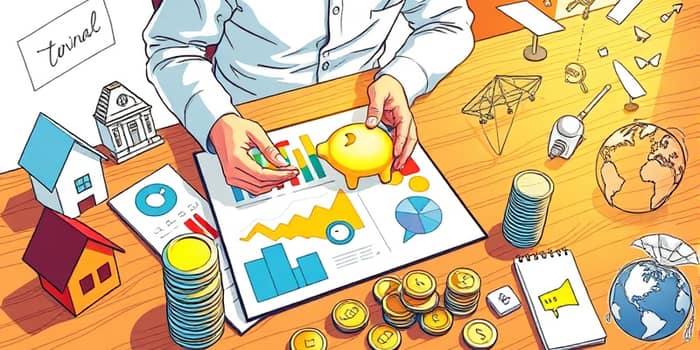
In an era of rising costs and economic unpredictability, mastering your finances has never been more crucial. Whether you’re managing personal expenses, supporting a household, or guiding a small business, a thoughtful budget offers clarity, control, and a clear path toward your ambitions.
With strategic planning and consistent habits, you can transform money management from a source of stress into a tool for empowerment and growth.
Realistic tracking and purposeful planning lie at the heart of a budget that works. By aligning every dollar with your goals, you’ll foster long-term financial health and peace of mind.
The Foundation of Smart Budgeting
Before assigning categories or crunching numbers, start with a vision. Defining goals that guide your spending provides context and motivation every step of the way.
- Set precise targets: Define short-term, intermediate, and long-term objectives using a specific, measurable, achievable, relevant, and time-bound framework.
- Track real spending: Monitor expenses over 3–4 weeks by reviewing statements for housing, utilities, groceries, transport, subscriptions, dining out, and unexpected costs.
- Categorize intelligently: Group transactions into “needs,” “wants,” and “savings/debt” to reveal patterns and surprises.
By documenting each expenditure, you’ll uncover habits that may hinder progress and discover opportunities to optimize.
Structuring Your Budget with Purpose
Once you’ve gathered data, allocate your income in a way that balances essential obligations, personal enjoyment, and future security. A popular guideline is the 50/30/20 rule, but you can adjust it to suit your situation.
If you prefer zero-based budgeting, assign every dollar to a purpose—bills, savings, debt reduction, or discretionary spending—to ensure nothing falls through the cracks.
Adopting zero-based budgeting: assign every dollar empowers you to maintain full control over your finances.
Building Resilience through Savings and Funds
With your framework in place, prioritize building buffers that protect against life’s uncertainties. Saving first should be non-negotiable.
- Automate contributions: Treat savings like a fixed expense—automate savings as a bill by scheduling transfers to high-yield accounts.
- Emergency fund goals: Aim for 3-6 months of essentials by calculating your rent, utilities, groceries, insurance, and medical costs.
- Plan seasonal expenses: Forecast yearly costs such as vehicle maintenance, holidays, school supplies, and taxes, then divide by twelve to set aside a monthly reserve.
These buffers reduce stress and prevent debt accumulation when unexpected bills arrive.
Dr. Michael McMillan of the University of Maryland emphasizes that “having a budget and an emergency fund will reduce the stress in your life and make you happier.”
Maintaining Flexibility and Adapting Over Time
Life evolves, and so must your budget. Regular check-ins allow you to celebrate progress, adjust for new circumstances, and refine allocations.
- Monthly reviews: Compare actual spending to your plan, note variances, and reallocate surpluses toward goals.
- Quarterly adjustments: Update projections for raises, cost-of-living changes, or shifting priorities such as home buying or education expenses.
- Contingency reserves: Keep a small buffer—contingency for unforeseen events—to cushion minor surprises without disrupting core categories.
By conducting periodic audits, you’ll stay on track and celebrate your small victories often, reinforcing positive behaviors.
Tools, Habits, and Mindset for Sustainable Success
Technology and daily practices can simplify your budgeting journey and ensure lasting results.
- Apps and methods: Leverage tools like Mint, YNAB, or Empower for automated tracking and categorization.
- Written systems: Research shows that tangible, pen-and-paper budgets increase accountability and goal attainment.
- Mindset shift: Embrace the belief that your budget is about freedom, not deprivation; focus on awareness, not restriction.
Wedbush Financial reminds us that “a budget is a roadmap for your future,” confirming that each dollar you allocate is an intentional investment in your vision.
In 2026’s dynamic economic landscape, characterized by high credit card debt exceeding $1.23 trillion and rising borrowing costs, flexibility and early preparation are paramount. By combining disciplined tracking, goal alignment, and regular reviews, you’ll build a spending plan that weathers volatility and fuels progress.
Your financial journey begins today. Embrace the principles of sustainable budgeting, customize each step to your reality, and watch as control, confidence, and clarity transform your relationship with money.
With living within your means as your anchor and an adaptable plan as your guide, you’re ready to achieve lasting financial brilliance.
References
- https://watershed.com/guides/sustainability-planning-2026
- https://www.the-independent.com/us/money/personal-finance-budgeting-tips-new-year-b2863055.html
- https://www.accountingdepartment.com/blog/aligning-your-2026-budget-with-strategic-goals
- https://www.wedbush.com/budgeting-and-saving-for-2026-a-smart-start-to-the-new-year/
- https://www.naccacpas.com/blog/how-to-create-a-2026-household-budget-that-actually-sticks
- https://www.forrester.com/bold/planning-guides/
- https://servicecu.org/resources/blog/detail/do-this--not-that--financial-wellness-tips-to-plan-your-2026-money-goals/
- https://www.infinitegiving.com/blog/nonprofit-financial-planning-2026-critical-priorities