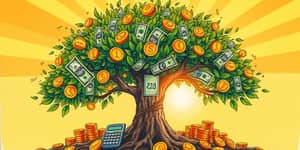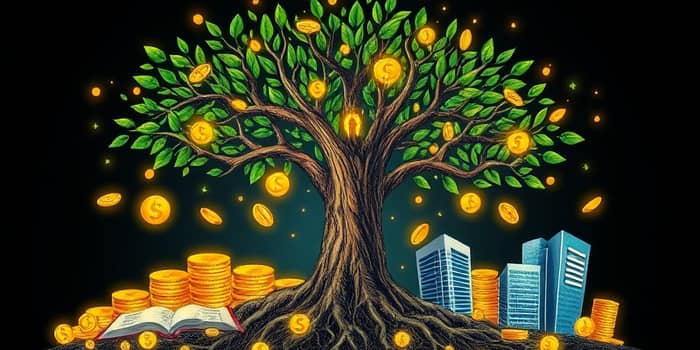
Traditional measures of success emphasize monetary gain above all else. Yet focusing solely on one form of wealth can leave organizations and individuals vulnerable to market shifts, social pressures, and environmental threats. Moving beyond single-income thinking invites us to recognize the full spectrum of assets we possess. By cultivating diverse streams of capital—financial, human, social, intellectual, constructed, and natural—we build resilience and unlock deeper value.
Historical Roots of Multi-Capital Thinking
The journey toward a broader understanding of capital began in the mid-20th century. In 1953, economist Howard Bowen introduced the idea that businesses have moral responsibilities beyond profit in his landmark book Social Duties of the Businessman. This concept evolved into Corporate Social Responsibility (CSR), embedding social and environmental concerns into corporate strategies.
By 1994, John Elkington’s Triple Bottom Line (TBL) framework formalized three pillars: profit, people, and planet. Although TBL often remains weighted toward financial outcomes, it sparked a global shift toward inclusive reporting. In 2014, Thomas and McElroy advanced this momentum with the MultiCapital Scorecard (MCS), providing a systematic way to track performance across multiple capitals.
Defining Capital Beyond Finance
Expanding our lens beyond financial flows requires clear definitions. The International Integrated Reporting Council (IIRC) identifies six capitals that organizations use and affect:
- Financial capital: Pools of funds available for use.
- Manufactured capital: Physical objects and infrastructure.
- Intellectual capital: Organizational knowledge, patents, and systems.
- Human capital: Skills, health, experience, and well-being.
- Social and relationship capital: Trust, networks, and stakeholder engagement.
- Natural capital: Ecosystem services and resources.
The MultiCapital Scorecard refines this to five vital capitals—natural, human, social and relationship, constructed, and economic (both financial and nonfinancial)—ensuring each is measured against sustainable norms. Flora and Flora’s Community Capitals Framework adds cultural and political dimensions, underscoring the role of local governance and heritage.
Implementing a Multi-Capital Approach
Adopting multicapital thinking involves structured methodologies. The MultiCapital Scorecard methodology unfolds in three key phases:
- Scoping and Materiality: Identify Areas of Impact (AOIs) and apply sustainability standards.
- Definition Phase: Set sustainable norms, establish trajectory targets, and design data collection protocols.
- Scorecard Implementation: Calculate scores, group into bottom lines, and integrate into strategic reporting.
Complementing this, the IIRC’s Integrated Reporting Framework emphasizes integrated thinking, urging organizations to consider the interdependencies among capitals when crafting strategy. This approach fosters accountability and clarifies how decisions today affect value creation tomorrow.
Practical Applications in Organizations
Forward-thinking companies leverage multiple capitals to unlock new opportunities. Tech startups invest in intangible assets—patents and talent—to innovate rapidly, while established manufacturers monitor environmental impacts to reduce resource depletion. Nonprofits cultivate social capital by strengthening community networks, thereby amplifying advocacy efforts and program reach.
Key benefits of a multicapital strategy include:
- Enhanced decision-making through comprehensive impact insights.
- Greater transparency and stakeholder trust.
- Resilience against market volatility and regulatory changes.
By mapping each initiative against capital thresholds and fair-share allocations, organizations ensure they operate within ecological and social carrying capacities. This context-based sustainability prevents unintended overuse of vital assets and promotes intergenerational equity.
Strategic Benefits and Long-Term Value Creation
Embracing multiple streams of capital transforms business models. Companies that align financial goals with social and environmental norms often achieve superior performance. Research suggests that firms practicing integrated reporting report higher innovation rates, reduced risks, and improved stakeholder relations.
Furthermore, multicapital thinking nurtures a culture of purpose. Employees engaged in projects preserving natural ecosystems or empowering underserved communities report higher job satisfaction and retention. Investors increasingly seek portfolios that deliver positive externalities, further incentivizing businesses to broaden their capital metrics.
Future Directions and Conclusion
As global challenges intensify—climate change, biodiversity loss, social inequality—the need for multicapital approaches becomes urgent. By broadening our focus beyond income alone, we can create systems that are not only profitable but also equitable and regenerative.
Every leader, entrepreneur, and citizen has a role to play. Start by mapping your own capitals: assess your skills, relationships, knowledge, and environmental footprint. Design pathways to cultivate each stream of value in harmony.
Beyond Income: Building Multiple Streams of Capital is not merely a framework—it’s a call to reimagine prosperity in holistic terms. When we invest collectively in all forms of capital, we secure a thriving future for people and planet alike.
References
- https://thrivabilitymatters.org/thrive-framework/thrive-framework-multi-capital-approach/
- https://www.wallstreetprep.com/knowledge/moic-multiple-on-invested-capital/
- https://www.wallstreetzen.com/blog/multiple-streams-of-income/
- https://www.moonfare.com/us/glossary/multiple-on-invested-capital-moic
- https://www.cnb.com/personal-banking/insights/create-multiple-streams-of-income.html
- https://equitymultiple.com/blog/moic-multiple-on-invested-capital
- https://www.navyfederal.org/makingcents/investing/15-passive-income-idea-to-generate-cash-flow.html
- https://pantheoninvest.com/multiple-income-streams-accredited-investors-guide/